User:ArsenalFan700/I-League Guide
Welcome all to the first ever I-League Guide! Here you will find a brief overview of the I-League as it enters its 11th season, as well as resources for following the league, and more!
This guide is a followup the the [Indian Super League Guide](https://np.reddit.com/r/soccer/comments/7dki7h/201718_indian_super_league_guide/) I did last week. Now, for those confused, the reason I am doing a guide for both leagues is because, for this season at least, both the Indian Super League and I-League are acting as India's top tier league... at least technically. So I thought it would be appropriate to give both leagues some love, especially this one.
The I-League kicks off today actually with Minerva Punjab hosting Mohun Bagan, a club that was founded in 1889 and were the first Indian club to defeat an all British side in 1911. The league will last until March 2018.
Just like the ISL Guide, let us start with some background on the league, which was founded in 2007 to professionalize the game in India.
(More information can be found at /r/IndianFootball)
- Background
The I-League is one of India's two major first tier football leagues. Founded in 2007, it was considered the the only top-tier league until this season when the Indian Super League (ISL) gained recognition from the Asian Football Confederation. Unlike the ISL, the I-League runs on promotion/relegation with the I-League 2nd Division but since 2013 has been accepting teams to enter the league via direct-entry (meaning they can skip the 2nd Division all-together).
Some of India's most historic clubs have and are playing in the I-League. Mohun Bagan and East Bengal are two of the more prominent ones. Both clubs from Kolkata were founded in 1889 and 1925 respectively and they historically play in the "Kolkata Derby", a derby which at its best could bring 125,000 people to the Salt Lake Stadium. Other historic clubs included the Goan sides like Dempo (1968), Salgaocar (1956), and Churchill Brothers (1988). Last seasons champions, Aizawl, were founded in 1988 while Shillong Lajong, Minerva Punjab, and Chennai City can trace back origins to 1983, 1955, and 1946 respectively.
Currently the league will run from 25 November to 7 March 2018 and will feature 10 teams. NEROCA, a side from Manipur, will enter the league after gaining promotion last season while Gokulam Kerala enter via direct-entry. The teams play each other in round-robin, home and away, for 18 games each. At the end of the season, the top team finishes as champion. The champion team also qualifies to participate in next season's AFC Champions League qualifier.
- Before I-League**
Before the start of the I-League, domestic league football began in India in 1996 when the All India Football Federation started the National Football League. Prior to the NFL, club teams would mainly play in their respective state leagues (such as the Calcutta Football League or Goa Professional League). Clubs would meet during various club competitions but the two main ones were the Federation Cup and Durand Cup.
The Federation Cup was founded in 1977 and before the NFL was considered India's top club prize. When the NFL began, the cup turned into India's version of the FA Cup. Usually the tournament format features a group stage then quick knock-out, usually at a neutral venue for a month. Mohun Bagan are currently the record holders of the tournament, winning it 14 times. East Bengal follow at second with 8. Bengaluru FC are the current reigning champions.
The Durand Cup was founded in 1888 and is organized by the Indian Army. It is the oldest football tournament in Asia and apparently one of the first ones around the world. While the Federation Cup was considered the FA Cup, you could call the Durand Cup the League Cup of India. Both Mohun Bagan and East Bengal are tied for most titles at 16 each but both haven't won it since 2000 and 2003 respectively. The tournament has lost a lot of shine over the years and now most professional clubs don't participate it in besides maybe 2-3 a year.
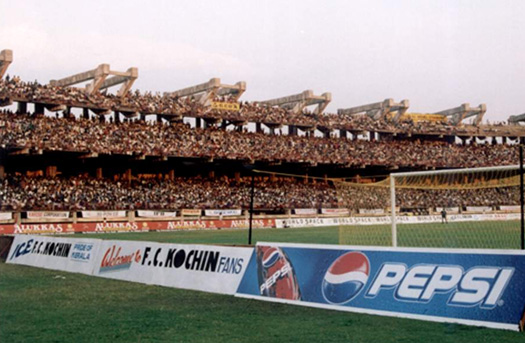
The NFL went as anyone could expect it... not so well. Poor infrastructure, lack of attendances all around, bad quality of play, and lack of professionalism set the league up for failure. FC Kochin, one of the league's more popular teams which could gather a crowd like [this](http://www.fckochin.in/images/pg_big4.jpg), folded after not being able to pay their players. After the 2006-07 season, the AIFF thought it was time for a change.
- The Start and Goan dominance**
Prior to the 2007-08 season, the league was relaunched as the I-League. The I-League was expected to bring professionalism into Indian football. The league had a media contract with Zee Sports and ONGC were brought in as title sponsors. The league started with 10 teams: Air India, Churchill Brothers, Dempo, East Bengal, JCT (Punjab), Mahindra United, Mohun Bagan, Salgaocar, Sporting Goa, and Viva Kerala.
The early days of the league saw the following: Dominance of clubs from the state of Goa, lack of results from the Kolkata clubs, lack of infrastructure and youth development, and lots of "random African" players dominating.
Dempo won the first I-League with Nigerian Odafa Onyeka Okolie winning the golden boot, scoring 22 goals. The majority of top scorers in the I-League were from Africa, mainly Nigeria and Ghana. "Legends" (They are to me) of the I-League from there include Odafa, Ranti Martins, Chidi Edeh, Yusif Yakubu, Muratia Ali, Felix Chimaokwu, and Ogba Kalu Nnanna. No one knows where they came from or how they were signed, but they came and scored goals. There physical prowess allowed them to score against easy Indian defenders.
With Odafa representing Churchill Brothers and Ranti Martins representing Dempo, both clubs being from Goa, it was an intense rivalry of sorts in the early seasons of the I-League. At the same time, the league expanded from 10 to 12 teams in 2008-09 and then 12 to 14 in 2009-10. The league drew criticism during this time for not expanding to other areas of India, with only 7 cities represented from 14 clubs.
- 2010 to 2013**
In 2010, the All India Football Federation, after getting out of their previous deal with Zee Sports, signed a 15-year, 700-crore (~$110 million today) deal with IMG-Reliance. The deal gave IMG-Reliance the rights over sponsorship, advertising, broadcasting, merchandising, video, franchising, and rights to create a new football league.
At this point, the clubs began feeling wary about the league and engaged in numerous meetings among themselves and the AIFF and the new commercial partners, IMG-Reliance. In February 2011, it was announced that I-League clubs would refuse to sign any licensing documents since they were unhappy with the lack of promotion from IMG-Reliance. It was around this time that the I-League saw two clubs disband, Mahindra United in 2010 and JCT after relegation in 2011.
Before the 2010-11 season, the AIFF also added a development side into the league. The team would comprise of players from the U19 side and would be playing in the I-League with the goal of eventually qualifying India for the World Cup in 2018 (lol). The team has unearthed some good talents for India, with players like Jeje Lalpekhlua, Narayan Das, and Pritam Kotal coming out of it.
There were also some positives that came out of this period. India did participate in their first AFC Asian Cup (Asia's Euros) for the first time in 27 years in 2011. Goalkeeper Subrata Pal earned plenty of accolades for his performance. Sunil Chhetri had earned a deal abroad with the Kansas City Wizards of Major League Soccer. We even saw better foreigners join the I-League with former A-League legend Carlos Hernandez joining Prayag United in 2012 and Lebanese international Bilal Najjarine also signing.
- Bengaluru FC**
Prior to the 2013-14 I-League season, the All India Football Federation decided to bring in new teams via direct-entry. This would mean that a new team can be formed without having to be promoted from the 2nd Division. This was done in order to encourage big corporate investment.
Dodsal Group and JSW Group were soon announced as the winners of the bids for I-League direct-entry. Dodsal Group were to enter their team, Mumbai Tigers, while JSW would create an entirely new entity known as Bengaluru FC. Eventually, Mumbai Tigers would fold before the season began (financial) while Bengaluru FC would go on to make history...
Before Bengaluru FC, their home city (Bangalore) had one team in the I-League known as Hindustan Aeronautics Limited SC (HAL SC for short). HAL played at the Bangalore Football Stadium when it looked like [this](http://www.thehardtackle.com/wp-content/uploads/2011/10/New-Bangalore-stadium.jpg) and games would be attended by a few hundred people. The team were shit and HAL had no marketing at all around the city.
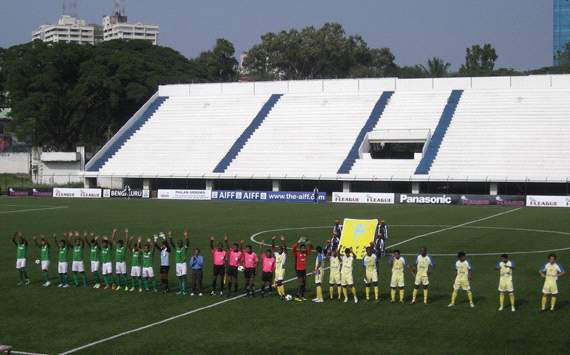
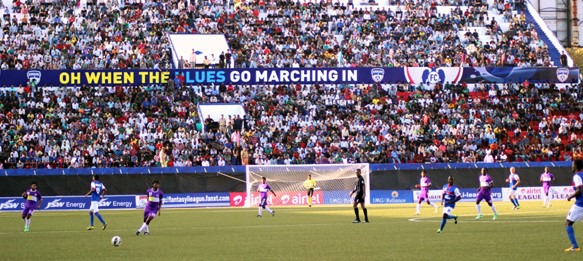
Bengaluru FC spent money on marketing the team, they spent money on a good coach in Ashley Westwood, money on foreign players we never seen before in Indian football, and spent on renovating the stadium and the result was evident for everyone to see... playing in front of over 9,000 fans a game in [the same ground](http://www.folomojo.com/wp-content/uploads/2016/02/17/F2.jpg), Bengaluru FC would go onto win the I-League in only their first ever season. It is easy to now say that Bengaluru FC is the most professional club in India, even among Indian Super League teams. They cared about the team, the fans, and the city and invested accordingly... even on a youth academy and training facility. They showed that it is possible to be in the I-League and be successful.
Unfortunately, the AIFF tried direct-entry again after Bengaluru FC's success and it was a failure. Bharat FC entered in 2014-15, finished last, and folded. DSK Shivajians entered for the 2015-16 season, finished last, stayed for 2016-17, and folded after that. Both clubs were based in the city of Pune and both clubs didn't do nearly as much as Bengaluru FC did to win the fans over and it proved fatal.
- Impact of the Indian Super League**
At this point in the I-League, things were going okay. The 2013-14 season finished with new direct-entry side Bengaluru FC winning the title, we had 13 teams and thus 24 games per team, money was starting to be invested, rivalries were building... it was not a bad time and any football fan in India can tell you that this was probably the first time that we were confident about the I-League... even if that confidence was small.
Content Disclaimer
Informasi ini disarikan dari Wikipedia dan disajikan kembali untuk tujuan edukasi. Konten tersedia di bawah lisensi CC BY-SA 3.0. Kami tidak bertanggung jawab atas ketidakakuratan data yang bersumber dari kontribusi publik tersebut.
- The information displayed on this website is sourced in part or in whole from Wikipedia and has been adapted for the purpose of restating it. We strive to provide accurate and relevant information, however:
- There is no guarantee of absolute accuracy. Wikipedia is an open, collaborative project that can be edited by anyone, so information is subject to change.
- It is not intended to constitute professional advice. The content displayed is for informational and educational purposes only. For important decisions (e.g., medical, legal, or financial), please consult a professional.
- Content copyright. Wikipedia is licensed under the Creative Commons Attribution-ShareAlike License (CC BY-SA). This means that content may be reused with appropriate attribution and shared under a similar license.
- Responsible use. Any risk arising from the use of information from this website is entirely the responsibility of the user.